Anxiety Treatment Norwich CT
Anxiety Treatment in Norwich, CT
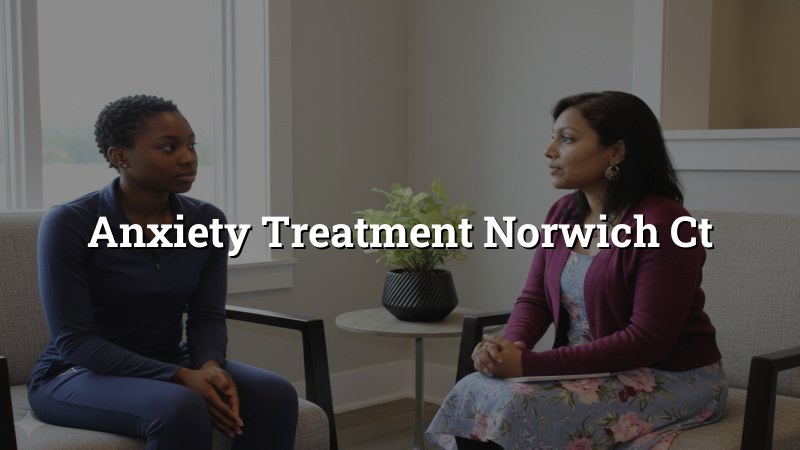
What Anxiety Actually Feels Like — Beyond the Worry
Most people know the mental side of anxiety: the looping thoughts, the what-ifs, the replaying conversations from three days ago. But the physical side catches people off guard. A racing heart that shows up for no clear reason. Chest tightness that makes you wonder if something's wrong with your heart. Nausea or stomach cramping before routine things — a meeting, a phone call, a trip to a crowded place. Muscle tension that lives in your shoulders or jaw. These aren't imaginary and they're not random — they're your nervous system running in threat mode when there's no actual threat. And over time, that's exhausting in a way that's hard to explain to people who haven't felt it.
Panic Disorder and GAD — Two Very Different Animals
Generalized anxiety disorder (GAD) is a slow burn. The worry is constant, it touches everything, and it doesn't quiet down even when circumstances are fine. Panic disorder is more sudden — episodes of intense fear with racing heart, shortness of breath, and a feeling that something catastrophic is happening right now. Both are real, both respond to treatment, and both are more common in communities with economic stressors and limited access to care. Norwich fits that profile. The important thing is that neither requires you to just endure it. Medication — SSRIs like Zoloft or Lexapro for GAD, or a combination approach for panic — can make a significant difference. So can having someone with real psychiatric training evaluate what's actually going on, rather than guessing.
Anxiety That Co-Occurs With Depression or ADHD
Anxiety rarely shows up alone. Depression and anxiety overlap so frequently that it's often hard to tell which came first — you're exhausted and withdrawn, but also wired and unable to rest. ADHD and anxiety share a lot of surface symptoms: racing thoughts, difficulty concentrating, restlessness. Getting an accurate picture requires a proper evaluation, not just checking boxes. Sindhia takes the time in that first appointment to understand the whole thing — what your anxiety looks like, what else might be driving it, and whether there's something underneath that's been missed. That leads to treatment that actually fits, rather than a prescription that half-works and leaves you wondering if this is just how you are.
Telehealth Fills the Gap in Eastern CT
Norwich is more than an hour from most psychiatric providers in Connecticut — and that distance alone keeps a lot of people from getting care. Telehealth changes that. Sindhia sees patients across Connecticut via secure video call, which means a Norwich resident gets the same access to a board-certified psychiatric APRN as someone who lives in West Hartford. No long drive, no waiting room, no disrupting your whole day. You book an appointment, click a link, and connect. She also speaks English, Malayalam, Tamil, and Telugu — so if English isn't your first language, that's not a barrier either. And she accepts Aetna, Cigna, Husky Health, Medicaid, United Healthcare, Anthem, ConnectiCare, and self-pay, so coverage is broad.
Frequently Asked Questions
Anxiety treatment for Norwich, CT — telehealth statewide and in-person in Rocky Hill.
Call 860-515-8689 or book online below.
Book an Appointment