ADHD Treatment in Groton, CT
ADHD Care in Groton, CT — When ADHD and Anxiety Show Up Together
Groton is a community where a lot of people carry a lot quietly. Naval Submarine Base New London sits right next door. There are active-duty service members, veterans, and their families here who've been operating in high-pressure environments for years. And one of the things high-pressure environments do is create excellent compensation strategies — for ADHD especially. You can function at a remarkably high level when structure is imposed from outside and the stakes are unmistakably clear. But when that structure changes — deployment ends, you transition out, life gets less regimented — the ADHD that the military's framework was holding together starts to surface. And it often arrives alongside anxiety, because years of white-knuckling through things your brain makes difficult leaves a mark. Sindhia Shyras, APRN is a board-certified Psychiatric Nurse Practitioner with nine years of experience who treats adults throughout Connecticut via telehealth — meaning Groton residents don't have to drive two hours west for good psychiatric care.
Why ADHD and Anxiety Overlap So Often
ADHD and anxiety are genuinely different things — but they coexist in a huge proportion of adults with ADHD, and they feed each other in ways that make both worse. ADHD creates chaos: missed deadlines, forgotten obligations, impulsive decisions, the constant feeling of being behind. That chaos generates anxiety — real, legitimate worry about the consequences of your own brain. And then anxiety makes ADHD worse, because an anxious brain is a distracted one. The two get so tangled that it can be hard to know which is which. Some people get treated for anxiety for years without anyone asking whether ADHD might be driving it. The treatment approaches for each are different, so getting the diagnosis right is what makes the treatment actually land.
Getting the Diagnosis Right When Both Are Present
When anxiety and ADHD coexist, the order and approach of treatment matters. Some ADHD medications can worsen anxiety — stimulants in particular can ramp up the nervous system in ways that make anxious people feel worse before they feel better. Sindhia takes this seriously. She won't just hand you a stimulant prescription and see you in a month. The evaluation covers both conditions — how they're showing up, how severe each is, which came first, what's tried before. Then the treatment plan is built to address both, often starting with whatever is causing more disruption and adjusting as the picture becomes clearer. For some people, treating the ADHD substantially reduces the anxiety because it removes the chaos that was generating it. For others, the anxiety needs its own direct treatment alongside the ADHD work.
Telehealth Means You Don't Have to Drive Across the State
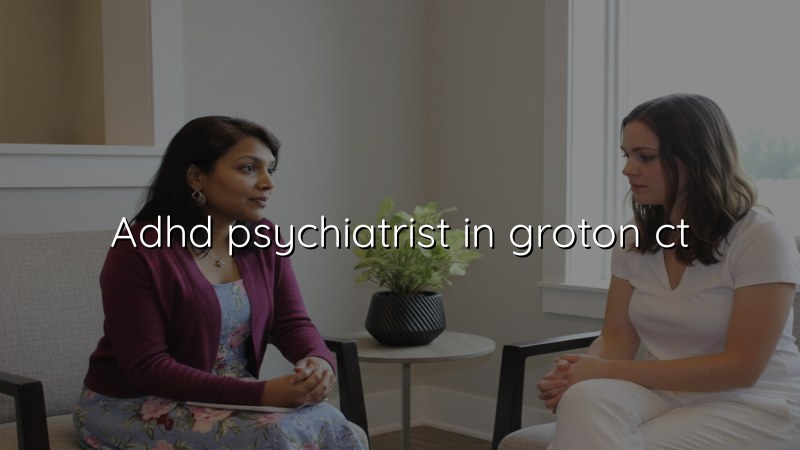
Groton is in the southeastern corner of Connecticut — about as far from central Hartford as you can get without leaving the state. Telehealth removes that geography problem entirely. You can meet with Sindhia via secure video from your home in Groton for your evaluation, medication management, and all your follow-up appointments. If you're active duty or a dependent and you're navigating TRICARE alongside civilian insurance, call 860-515-8689 to talk through your coverage — we accept Aetna, Cigna, Husky Health, Medicaid, United Healthcare, Anthem, ConnectiCare, and self-pay. Sindhia speaks English, Malayalam, Tamil, and Telugu, and she brings nine years of experience to evaluations that take your whole situation into account.
Frequently Asked Questions
Serving Groton, CT and all of Connecticut via telehealth.
Call 860-515-8689 or book online below.
Book an Appointment