Anxiety Psychiatrist in Newington, CT
Anxiety Psychiatrist in Newington, CT — For When Your Brain Won't Let You Sleep
Newington looks quiet after dark. The neighborhoods go still, the cul-de-sacs empty out, the lights come down one by one. But for a lot of people here — people who look completely fine by day — 2am tells a different story. You're awake again. Your mind is running through something that happened three days ago, or something that might happen next week. You're calculating what you said in that meeting, rehearsing a conversation you haven't had yet, dreading tomorrow before today is even done. You don't know why your brain does this. You just know it's exhausting — and that it's been going on long enough that you can't remember what sleeping through the night actually felt like. Sindhia Shyras, APRN is a board-certified Psychiatric Nurse Practitioner with nine years of experience, and she helps Newington residents get their sleep — and their lives — back.
What Anxiety Does to Your Sleep (And Why It's Not Just in Your Head)
There's a reason anxiety and sleep disruption are so tightly linked. Your nervous system doesn't know the difference between a real threat and a thought about a threat. So when your brain starts running through worries at night, your body responds the same way it would if you were actually in danger — cortisol rises, your heart rate picks up, your muscles stay tense. Sleep becomes nearly impossible when your body thinks it needs to stay alert. And the less you sleep, the more anxious you feel the next day, which makes it harder to sleep the night after that. It's a cycle that tightens over time. And no amount of chamomile tea or white noise machines breaks it, because the problem isn't a habit. It's your nervous system misfiring — and that responds to treatment.
The 2am Spiral — And What's Actually Driving It
You know the feeling. You wake up at some point between midnight and 3am and your brain immediately loads a problem. Maybe it's financial. Maybe it's a relationship. Maybe it's something vague — just a heavy sense that something's wrong, even when you can't name it. You try to think your way out of it, which only feeds it. You look at the ceiling. You check your phone. You try to breathe slowly. Sometimes it works a little and you drift back off. A lot of nights it doesn't, and you're still awake at 4am, dreading the alarm at 6. This isn't a weakness — it's anxiety doing what anxiety does. And Sindhia — who's been evaluating these patterns for nine years — knows how to trace the spiral back to its source and interrupt it.
What Getting Help Actually Looks Like
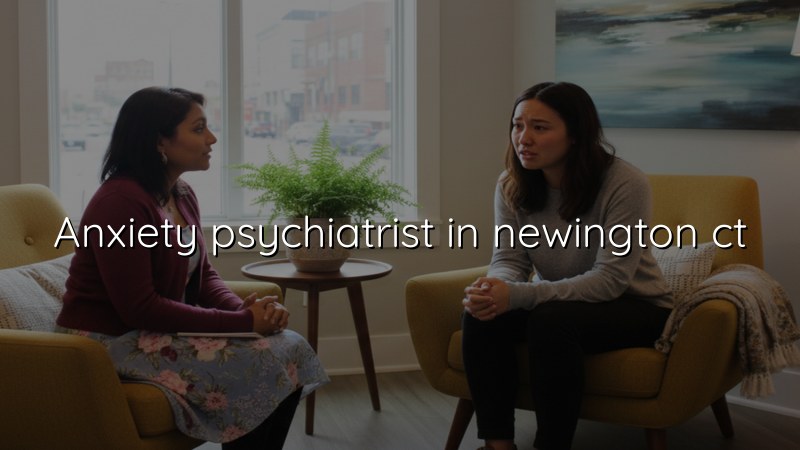
Your first visit with Sindhia is a full psychiatric evaluation. She's going to ask about your sleep — when it started, what wakes you up, what your mind does when it does. She'll ask about your days too, because anxiety at night rarely stays there; it usually shows up in your energy, your focus, your patience, your appetite. She accepts Aetna, Cigna, Husky Health, Medicaid, United Healthcare, Anthem, ConnectiCare, and self-pay, so insurance shouldn't be the thing standing in your way. She also speaks English, Malayalam, Tamil, and Telugu — and she's thoughtful about the cultural context some patients bring to conversations about mental health. By the end of the evaluation, you'll have a plan. That might mean medication that lowers the overall anxiety level and makes sleep possible again. It might mean supportive therapy to address the patterns underneath. But it won't be vague, and it won't be rushed. Telehealth appointments are available to anyone in Newington and across Connecticut — so you can see Sindhia from home, without having to drive to Rocky Hill at all. Though the office at 2049 Silas Deane Hwy, Ste 209 is there for you if you'd rather come in.
Ready to Feel Like Yourself Again?
Serving Newington and all of Connecticut via telehealth. Call us at 860-515-8689 or book online.
Book an Appointment