Anxiety Treatment in Greenwich, CT
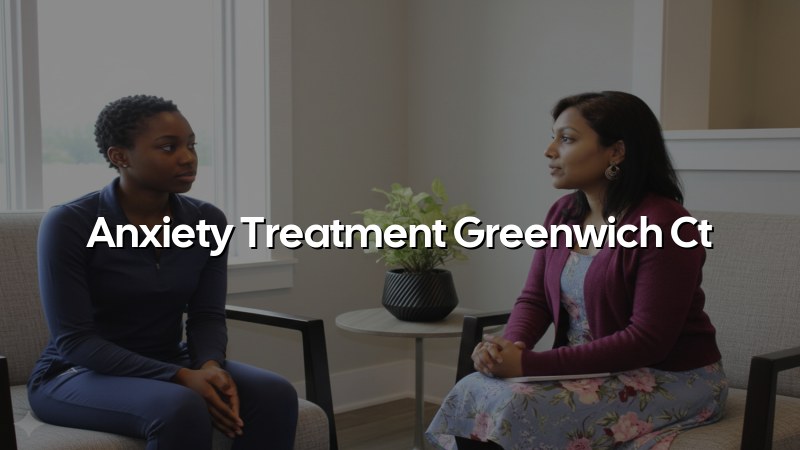
Greenwich carries expectations — about performance, about appearances, about keeping up in one of the most affluent and professionally intense communities in New England. And those expectations produce a very specific kind of anxiety: the kind you don't talk about. High-functioning, well-disguised, running quietly in the background while you hit every meeting, manage every commitment, and look entirely composed from the outside.
But that anxiety is real — and it has real costs. Sleep that never quite restores you. A constant undercurrent of what-ifs. Physical tension that's become so normal you barely notice it anymore. The inability to actually relax even when you technically have the time. These aren't signs of weakness or a character flaw. They're symptoms — and they respond well to proper psychiatric care.
Sindhia Shyras, APRN, is a board-certified Psychiatric Nurse Practitioner with over nine years of experience treating anxiety in adults. She sees Greenwich patients via telehealth — private, discreet, and on your schedule — and in person at 2049 Silas Deane Hwy, Ste 209, Rocky Hill, CT.
High-Functioning Anxiety in a High-Pressure Environment
Greenwich is not a place where people readily admit they're struggling — and that's part of the problem. High-functioning anxiety often gets dismissed as "just being driven" or "taking things seriously." But there's a difference between healthy motivation and an anxiety response that won't shut off. When the rumination follows you home, when you can't be present with your family because your mind is always three steps ahead, when the physical symptoms (tight chest, GI issues, insomnia) have been going on long enough that they feel normal — that's anxiety that deserves treatment, not just another productivity strategy.
The Evaluation and Treatment Process
Your first appointment with Sindhia is a full psychiatric evaluation — about an hour — where she builds a real picture of your anxiety. What type? How long? What's it affecting? What have you tried? From that foundation, she'll put together a treatment plan. Medication options include SSRIs like Lexapro or Zoloft (effective, non-habit-forming, well-studied for anxiety), SNRIs like Effexor, buspirone, and for situational anxiety — presentations, big social events — beta-blockers. She also brings supportive therapy into the work: understanding the patterns driving the anxiety and building strategies that are practical for a demanding life. Follow-up visits are scheduled from the start so the treatment actually gets refined over time.
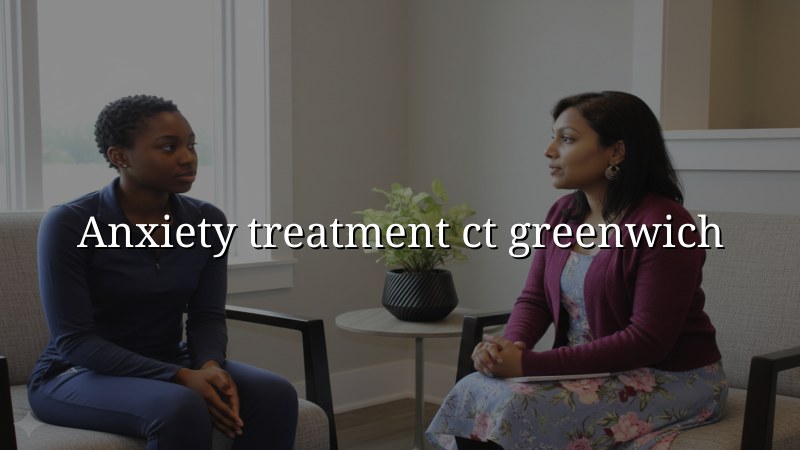
Discreet, Private Telehealth Care
Telehealth is well-suited to Greenwich for a reason that isn't just convenience. Many people in this community prefer that their mental health care stays completely private — no waiting rooms, no neighbors in the parking lot, no chance of running into someone you know. A telehealth appointment with Sindhia is a secure video call from wherever you choose to be. Your care is between you and your provider. She accepts Aetna, Cigna, Husky Health, Medicaid, United Healthcare, Anthem, ConnectiCare, and self-pay. Call 860-515-8689 or book online.
Frequently Asked Questions
Yes — in Connecticut, Psychiatric Nurse Practitioners are licensed to diagnose mental health conditions, prescribe and manage medications, and provide therapy. Sindhia Shyras is board-certified in psychiatric-mental health nursing with nine-plus years of clinical experience. The scope of care she provides for anxiety treatment is equivalent to what a psychiatrist offers.
SSRIs are the most common first-line treatment — Lexapro, Zoloft, Prozac. Non-habit-forming, well-tolerated, effective for generalized anxiety, social anxiety, and panic disorder. SNRIs like Effexor or Cymbalta work similarly and can be a good fit depending on your situation. Buspirone is a longer-term non-sedating option. Beta-blockers help with acute situational anxiety — public speaking, high-stakes events. Short-term benzodiazepines are used carefully when appropriate. Sindhia will walk you through the trade-offs of each option for your specific case.
Stress responds to the situation — when the situation changes, the stress typically does too. Anxiety has a way of persisting, attaching to new things, and showing up even when circumstances are relatively calm. If you find the worry is constant, disproportionate, hard to control, or affecting your sleep, your relationships, or your ability to enjoy your life on a regular basis — that's anxiety. And it's worth evaluating properly rather than just trying to manage it with willpower.
